Jerusalem 1917–1918, a vellum autograph album featuring the Count of Ballobar
A unique album from the Fall of Ottoman Jerusalem & the British Mandate: with a signed poem by the Spanish Consul, Antonio de la Cierva y Lewita, as well as German and British soldiers
Author
Publisher
Printing Details
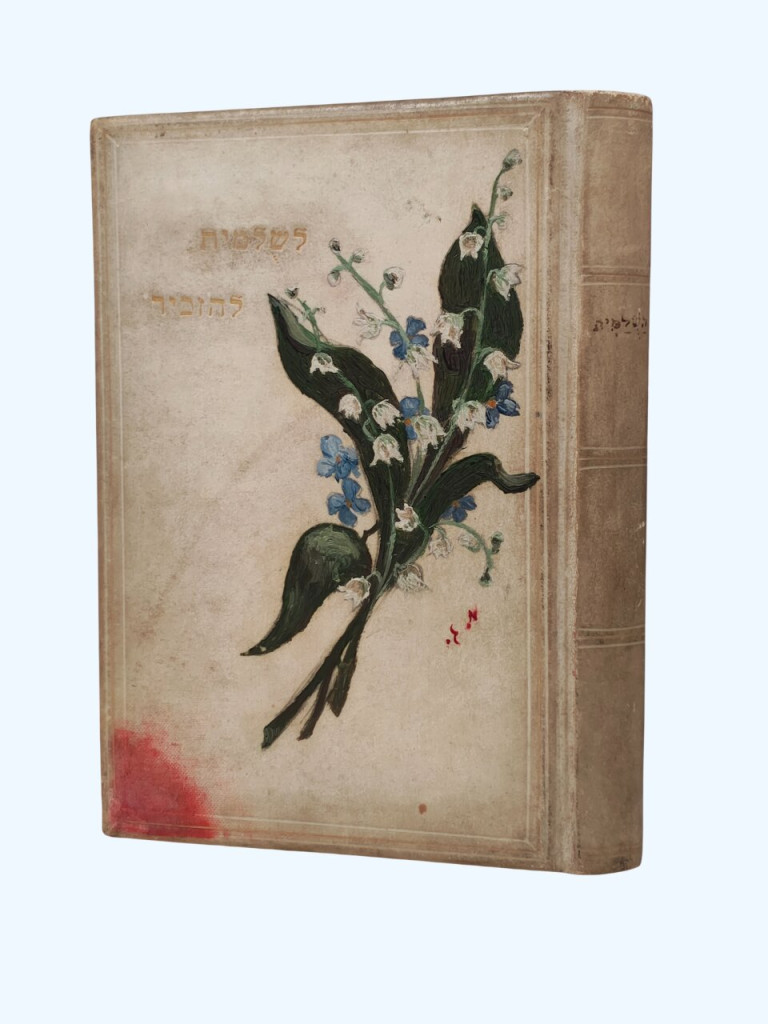
A vellum bound autograph book, with hand-painted floral decoration to the upper board. This book serves as a primary source document for the Surrender of Jerusalem (December 1917) and the transition from Ottoman to British Mandate rule. It is exceptionally rare due to its multilingual nature and the presence of signatures from opposing and occupying forces (German and British). Of particular note is the presence of a manuscript page signed by Antonio de la Cierva y Lewita, the Count of Ballobar / El Conde de Ballobar, the Spanish consul and only foreign diplomat in Jerusalem throughout the Great War.
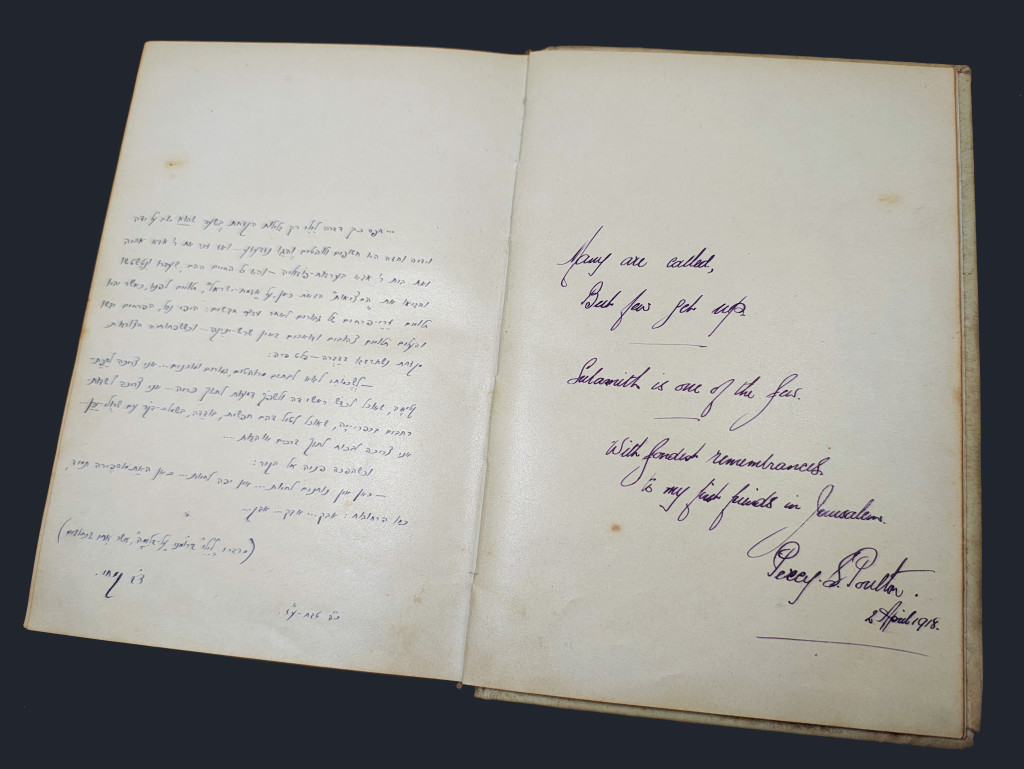
This is a blank notebook, perhaps meant as a religious notebook as the words "Study of Torah" are in Hebrew and gilt to the upper board, along with a delightful hand-painted floral design (Lily of the Valley and Forget-me-nots). Also written on the front cover is what appears to be Lamed-Zayin combines the 12th and 7th Hebrew letters, representing the number 37 in gematria. Lamed signifies learning, teaching, and the heart, while Zayin represents a weapon, sustenance, or divine movement. Top edge gilt, and reads from right-to-left. The book is essentially bound with blank pages. There are about fifteen entries, scattered throughout, and the languages are English, German, Hebrew, Russian and Spanish. It measures 19 × 13cm.
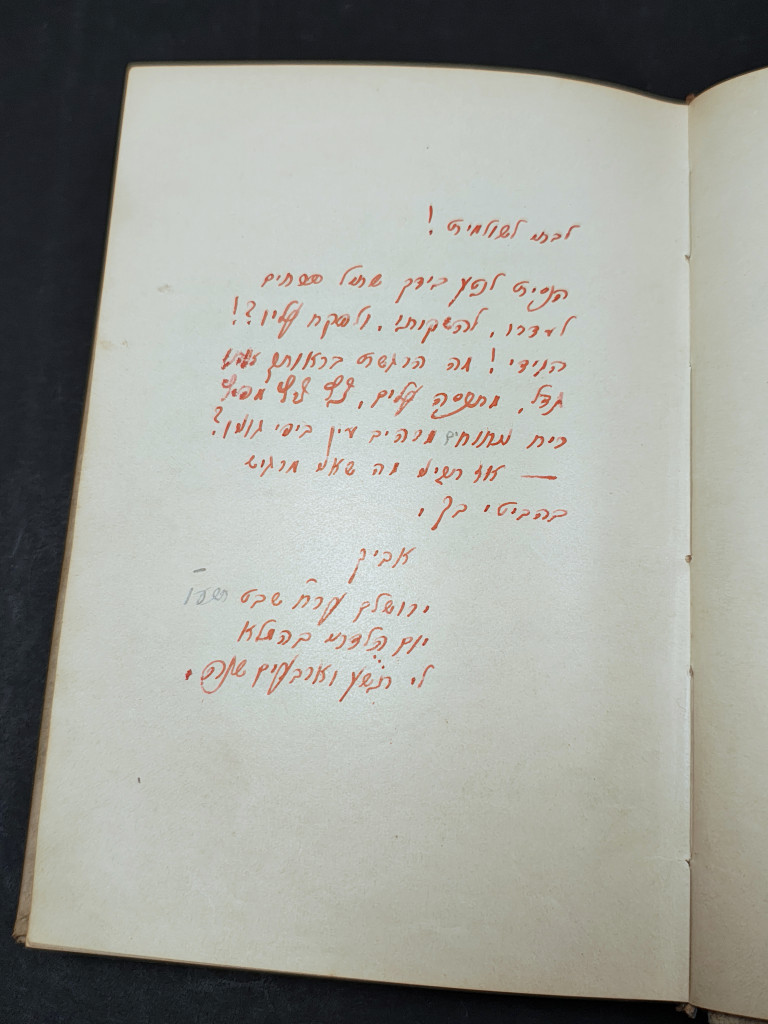
The ownership is unknown but there some clues. It appears to be to woman named Sulamith, as that named is mentioned a few times, including an inscription from her father (Yitzhak Shabtai or similar).
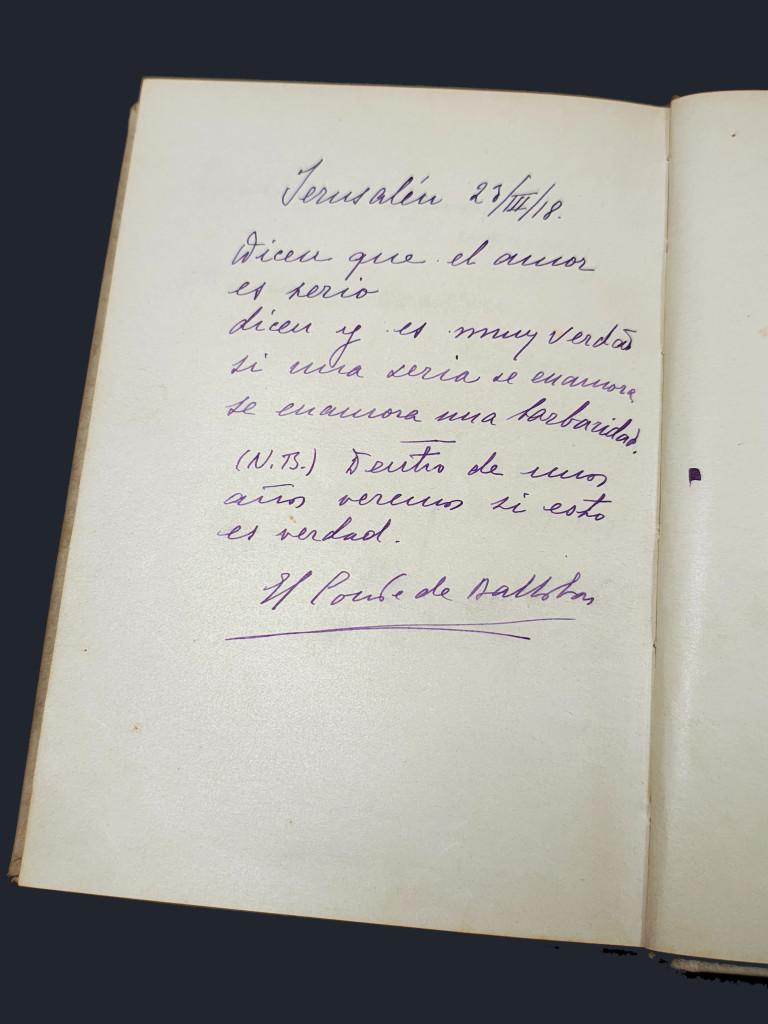
The most important inscription is from Antonio de la Cierva y Lewita, the Count of Ballobar, and is dated 23rd March 1918. He was the Spanish Consul in Jerusalem from 1914 to 1920. During World War I, he served as a neutral, "consul for all seasons," managing the interests of various belligerent nations, including British, French, Austrian and German, while protecting Holy Land institutions. His diaries of that time have become an important document to the events he witnessed offering an unparalleled insight into late Ottoman Jerusalem, the spread of Zionism and the establishment of British rule. His entry is in purple ink and is a handwritten poem about love (Dicen que el amor es serio / dicen y es muy verdad / si una seria se enamora / se enamora una barbaridad), with a further handwritten note: "Dentro de unos años veremos si esto es verdad." (In a few years we will see if this is true), and is signed El Conde de Ballobar.
Sulamith's father has signed the book on 30th of Shevat, 5678, which corresponds to February 12, 1918, which he also describes as 'the day of liberation from the siege.' His is one of five inscriptions in Hebrew, the others containing blessings, quotations from Abraham ibn Ezra etc.
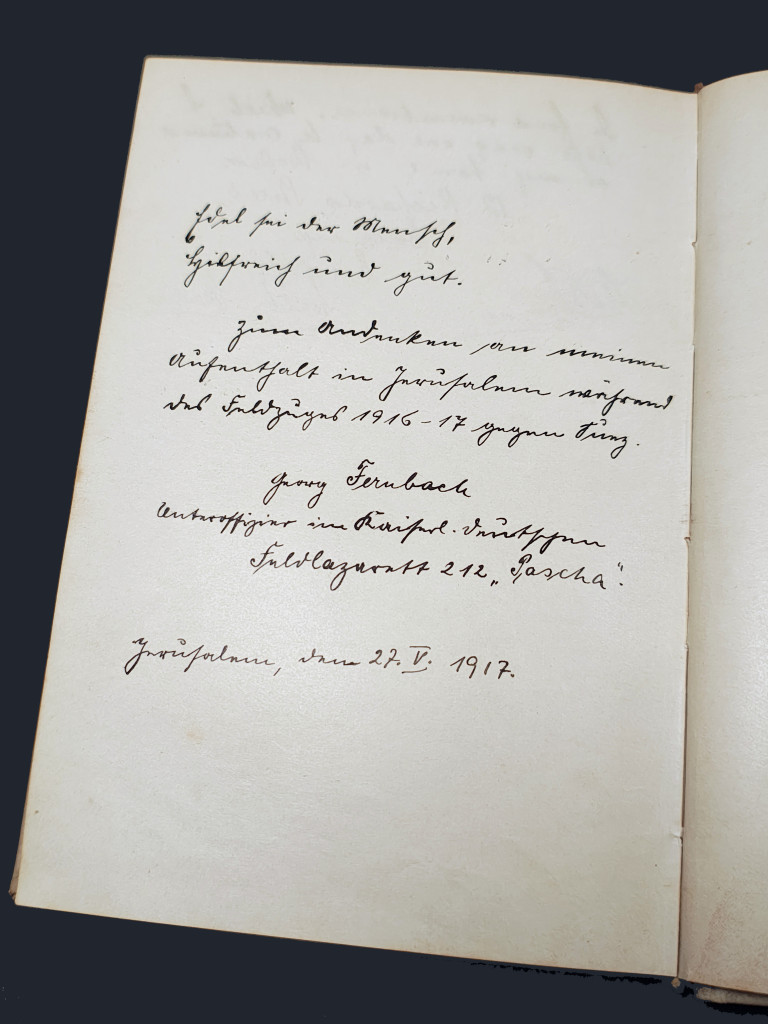
There are three entries in German, all dating to pre-December 1917 when the Allies under General Allenby took control of Jerusalem. One is a German soldier who writes "Zum Andenken an meinen Aufenthalt in Jerusalem während des Feldzuges 1916–17 gegen Engl." (In memory of my stay in Jerusalem during the campaign of 1916–17 against the English), signed by Georg Fernbach, Unteroffizier im Kaiserl. Deutschen Feldlazarett 212, "Pascha" (Non-commissioned officer in the Imperial German Field Hospital 212, "Pascha."). Another is a fond farewell written in November 1917, just before the British entered the city (signature indecipherable); and the third is a philosophical poem: "Eternity cannot rob you of what you are", signed by a Dina C Mayer in July 1917.
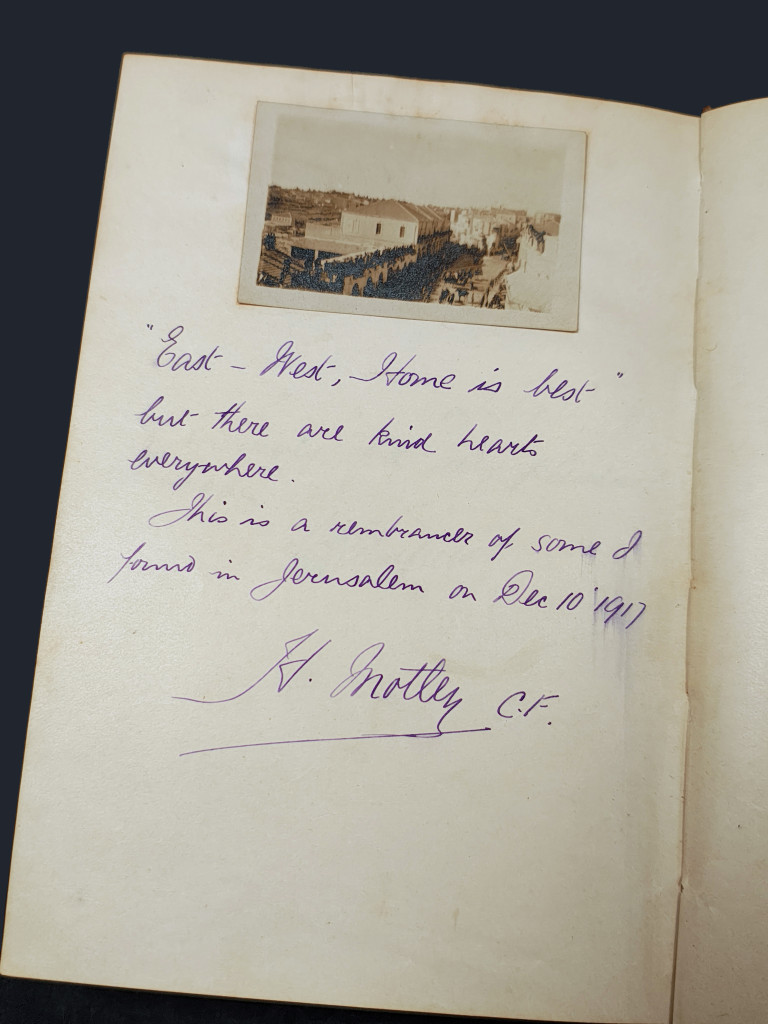
After December, the inscriptions turn to the British and Allied forces of which there are five. They include a Forces Chaplain called H Motley who writes ""East—West, Home is best" but there are kind hearts everywhere. This is a remembrance of some I found in Jerusalem on Dec 10, 1917", this is the day after the Ottoman mayor of Jerusalem surrendered the city to the British and includes a small black and white snapshot. Another is in a mix of English and Hebrew, which reads "In remembrance of my first Pesach spent away from home— a Pesach spent in a way many a Jew from England may well envy—in the holy city of Jerusalem among new friends & good friends" This is signed in Hebrew by (I think) Abraham Pinchas Golderg. A third is a gramogram which reads "YY U R YY U B I C U R YY 4 me" which means "Too wise you are, too wise you be, I see you are too wise for me", this is signed by a soldier called Poulton in March 1918 (and a possible further inscription by this soldier, also naming Sulamith). The Russian language entry is also by an English soldier, "Words and thoughts disappear, Only facts remain" and is signed by a T Lewin (ASC, MD or MT), Jerusalem, March 20, 1918. There are a few other smaller inscriptions with a simple message and name, and two small pen and ink sketches.
Condition
Generally very good. There is a red ink stain to the bottom front cover and general surface marking to the boards. The contents are in good clean. There is a little tanning to the page edges and some creasing where the small snapshot has been pasted in. A more recent previous owner's bookplate is pasted in to the front pastedown. As mentioned, most of the book is blank but what is there is a fascinating and rather rare snapshot into the people one Jerusalem person met during the second half of the First World War, and the Count of Ballobar's signature is incredibly hard to find.
Further images available on request.
Books are currently zero-rated for duty (as of January 2026), so the price shown is the price you pay.
Price
£500.00