RMS Aquitania: Original Pencil Plans/Sketches Attributed to Arthur J. Davis
With two original freehand pencil plans/sketches executed on the endpapers of Kipling’s Life’s Handicap (1913)
Author
Publisher

Printing Details
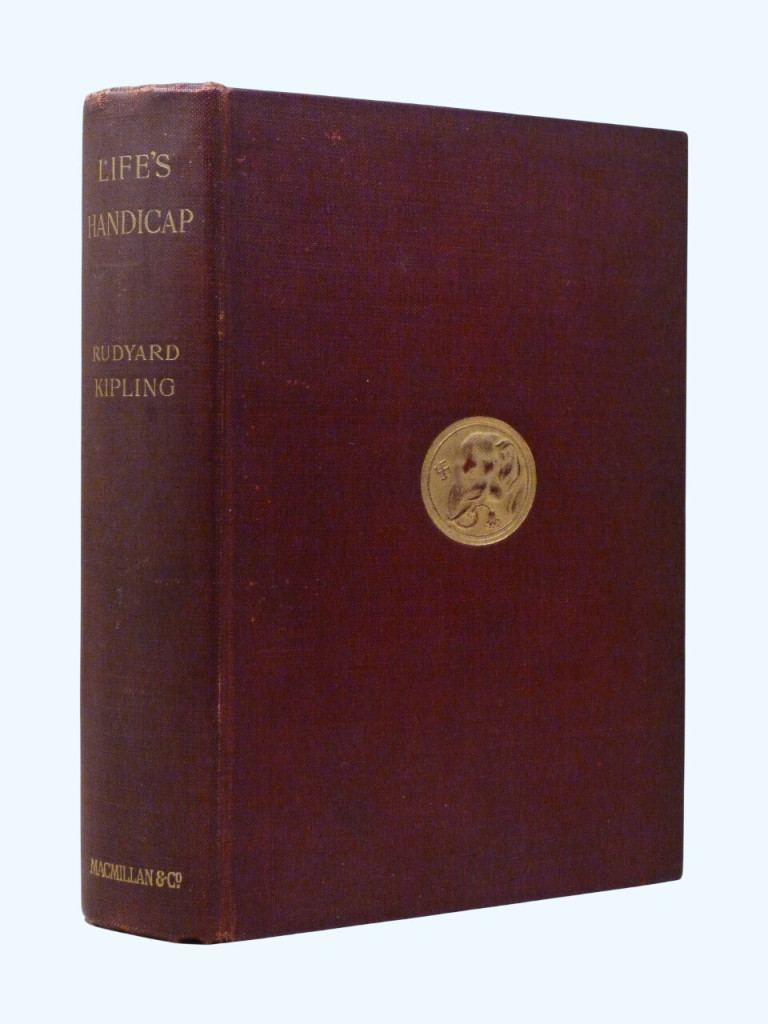
Reprint. Hardback, original red cloth binding, gilt titling to spine and gilt elephant roundel to upper board. Top edge gilt. 20.5 × 13cm, 407pp [1].
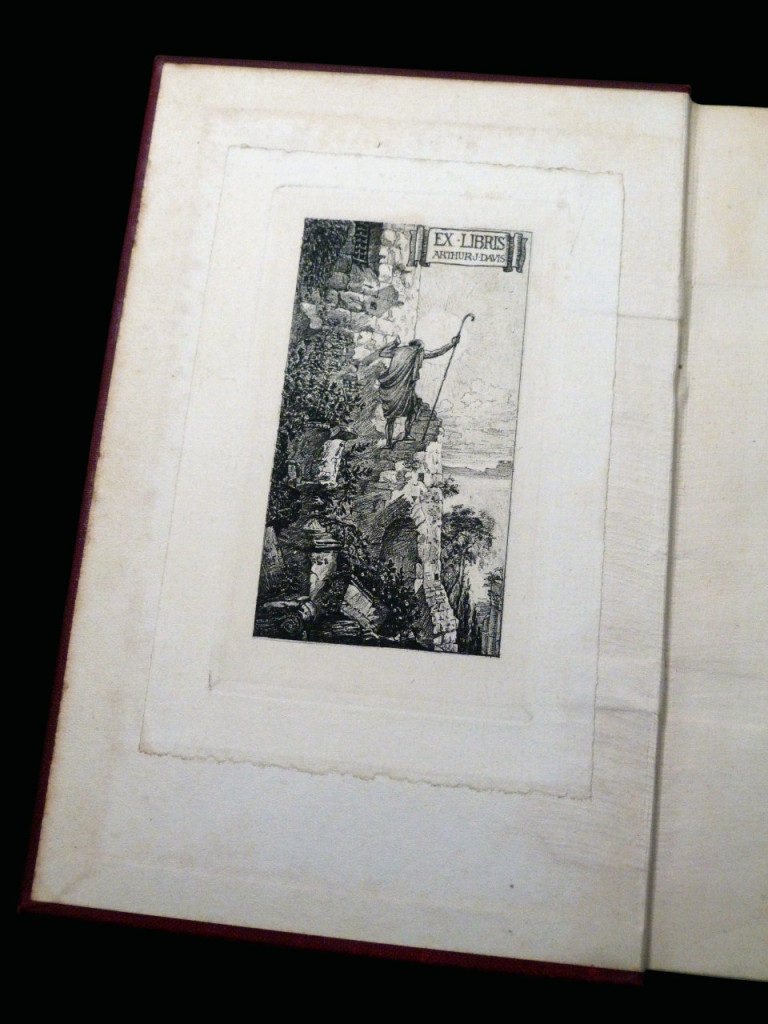
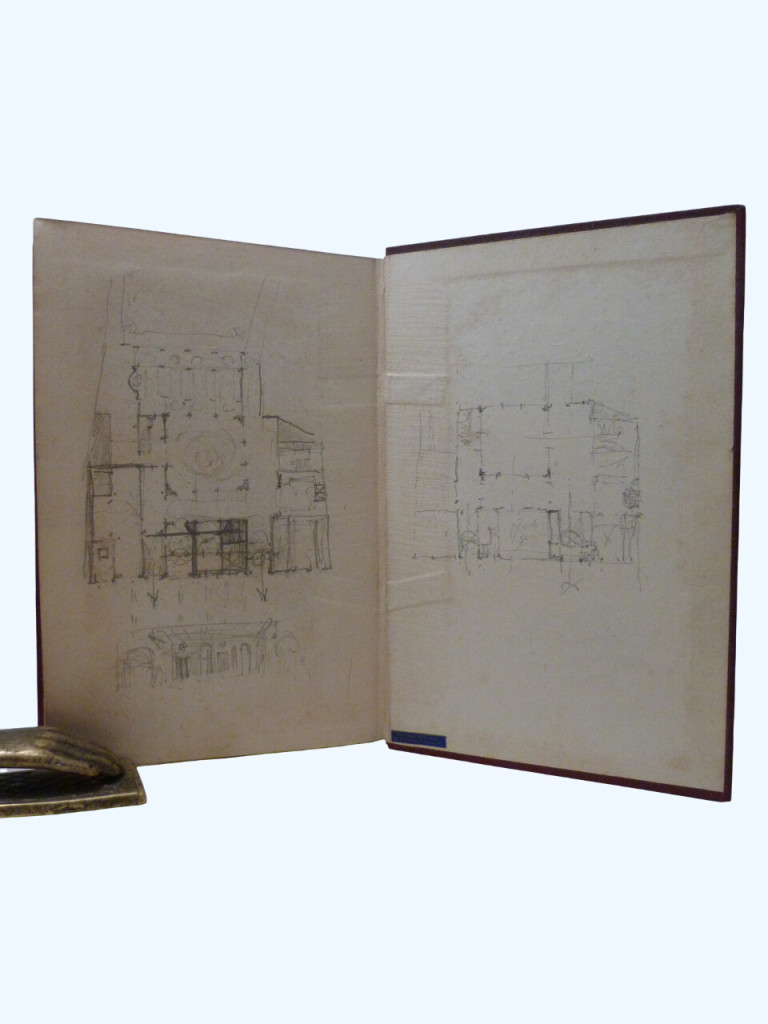
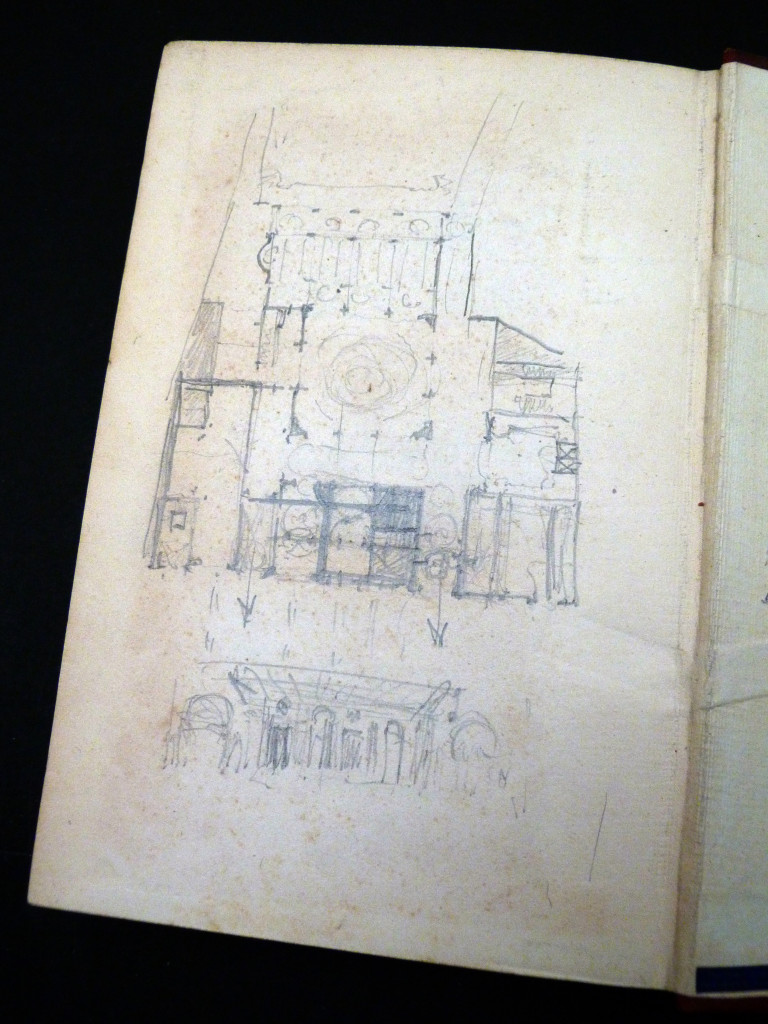
This copy has a remarkable maritime history. It was owned by architect Arthur J. Davis, with his bookplate to the front pastedown, and the rear endpapers contain two architectural pencil plans or sketches believed to relate to the smoking rooms of RMS Aquitania.
The left-hand drawing is the more detailed of the two and appears to show the funnel casing at the base of the plan, with a central swirl suggesting the outline of a skylight; the tapering of the deck plan is consistent with the aft position of the smoking room. The right-hand drawing is a similar but simpler plan, possibly representing a secondary smoking room.
The presence of Davis’s bookplate, together with the subject matter of the sketches and his documented role in designing the public interiors of Aquitania during this period, strongly suggests that these drawings were executed by Davis in association with his own copy of the book. The technical nature of the plans and their close correspondence with Davis’s known professional work further argue against later or casual additions.
Arthur Joseph Davis (1878–1951) was an English architect trained at the École des Beaux-Arts in Paris and co-founder of the firm Mewès & Davis. The firm was responsible for the interior design of the London Ritz Hotel, notable country houses, and the public rooms of RMS Aquitania in 1911–1914—a period that closely coincides with the publication date of this book (1913).
While no external authentication is offered, the attribution is made in good faith on the basis of ownership evidence and contextual consistency.
Kipling's selection of short stories first published in 1891, set in colonial India. Most had previously been published in periodicals.
Condition
The pencil sketches are in good condition, there is a little offsetting from each (when the books has been closed and they've faced each other) and some light age-toning to the endpapers. The red cloth is good but a little darkened, and there is light scattered foxing to the pages throughout. However, the bookplate and sketches make this a unique item of Aquitania history.
As of October 2026, books remain duty-free. The price of the book incurs no extra import duty fees.
Price
£200.00